Historical Facts
YEAR: 2004 | LOCATION: City of David, Jerusalem
SIGNIFICANCE: Confirmed the historical setting of John 9 and linked New Testament events to real, verifiable geography
It was a quiet corner of Jerusalem, largely forgotten beneath layers of history, until a broken sewage pipe in 2004 led to an astonishing find: the ancient Pool of Siloam, where Jesus healed a man blind from birth (John 9). What began as a routine plumbing exercise turned into one of the most significant biblical discoveries of the 21st century—bringing New Testament history to life, stone by stone.
A MIRACLE IN THE MAKING
In the Gospel of John, chapter 9, Jesus spits on the ground, makes mud, applies it to a blind man’s eyes, and tells him, “Go, wash in the Pool of Siloam.” The man obeys, washes, and comes back seeing. For centuries, scholars debated the location—and even the existence— of this pool.
Before 2004, a small Byzantine-era pool was traditionally associated with the miracle, but it didn’t quite match the historical or biblical context. That changed when Israeli archaeologists working near the City of David stumbled upon steps leading down to a much larger, older pool—one that fit both the time of Jesus and the description in John’s Gospel.

THE DISCOVERY
The Pool of Siloam was discovered in 2004 by Eli Shukron, an Israeli archaeologist, and Ronny Reich, a professor of archaeology at the University of Haifa.
HERE’S HOW THE DISCOVERY HAPPENED
While workers were repairing a sewage pipe near the southern end of the City of David (just outside the Old City of Jerusalem), they stumbled upon ancient stone steps. Realizing the significance, the Israel Antiquities Authority called in Shukron and Reich to investigate.
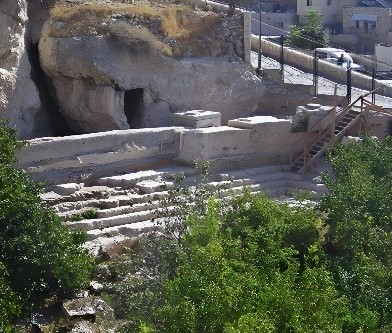
As they excavated further, they uncovered a large stepped pool—clearly dating to the Second Temple period (around the time of Jesus). It was eventually identified as the biblical Pool of Siloam, where Jesus healed the man born blind (John 9). Excavation revealed a monumental pool with wide steps on at least three sides. It was designed to accommodate hundreds of pilgrims, which makes sense—it was used for ritual cleansing during the Second Temple period, when Jewish pilgrims would ascend to the temple for festivals. This wasn’t just a random water reservoir. It was part of the spiritual rhythm of Jerusalem, linked to purity, worship, and prophecy. Even more intriguing: This pool is connected to Hezekiah’s Tunnel, an engineering marvel built in the 8th century BC to bring water safely into Jerusalem (2 Kings 20:20). That tunnel still exists —and you can walk through it today!
A MODERN-DAY REMINDER
What makes this discovery so powerful is its accessibility. Visitors to Jerusalem can walk the very steps the blind man walked. They can see the path from the pool to the temple. Suddenly, the Gospel comes alive—not as an abstract idea but as a vivid experience grounded in soil, stone, and water.
As we continue through the “Footprints of the Bible” series, the Pool of Siloam reminds us that the Bible is not just a book to believe in—it’s a world to explore. And sometimes, it’s as close as a broken pipe and a little digging.